Quick answer
The right tool depends on what you're working on.
Pick the category that matches your situation, then compare options inside it.
- If you want licensed, weekly support Start with online therapy
- If you want a daily 5–10 minute habit Start with a therapy or mindfulness app
- If you want a structured self-help track Start with a workbook
- If you want a quiet, reflective daily practice Start with a guided journal
Where to start
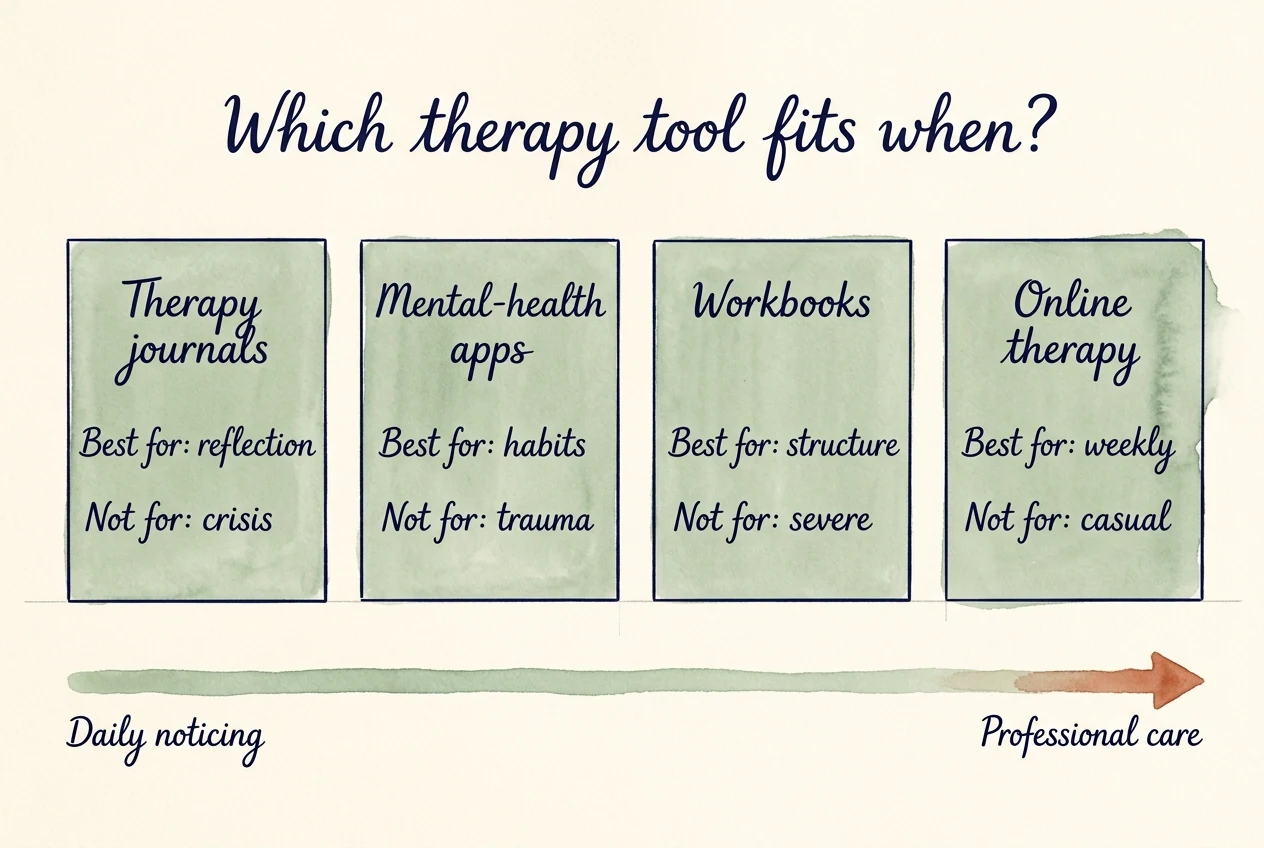
A short decision rubric across categories
Most "best of" lists assume you've already chosen a category. Here's the cross-category question first: which type of tool fits your situation, and when should you skip it?
Online therapy
Suits when: You want a licensed clinician, structured weekly support, or a path that can route through insurance.
Skip when: Your budget is tight and your situation is mild-to-moderate, or you only want short, daily check-ins.
Compare the four therapy platforms →Mental health apps
Suits when: You want daily support — meditation, sleep, mood tracking, or a CBT chatbot — for a small monthly cost or free.
Skip when: You're working through trauma, severe symptoms, or a diagnosis. An app is a supplement, not a substitute.
Compare the four apps →Workbooks
Suits when: You want a structured, evidence-supported self-help track — anxiety, depression, low mood — at one-time book pricing.
Skip when: You won't read the chapters and do the worksheets. A workbook only works if you actually use it.
Compare the workbooks →Therapy journals
Suits when: You want a 5-15 minute daily practice for noticing thoughts, tracking mood, or processing the day.
Skip when: You need active intervention or coaching. A journal records — it doesn't intervene.
Compare the journals →One rule across all four: these tools are designed for strain, not for crisis. They can be a real bridge — while you wait for a therapy spot, between sessions, through a hard stretch, or alongside the care you already have. What they aren't built for is suicidal thoughts, active trauma response, or symptoms that keep getting worse. If that's where you are right now, route to a clinician or a crisis line first.
At a glance
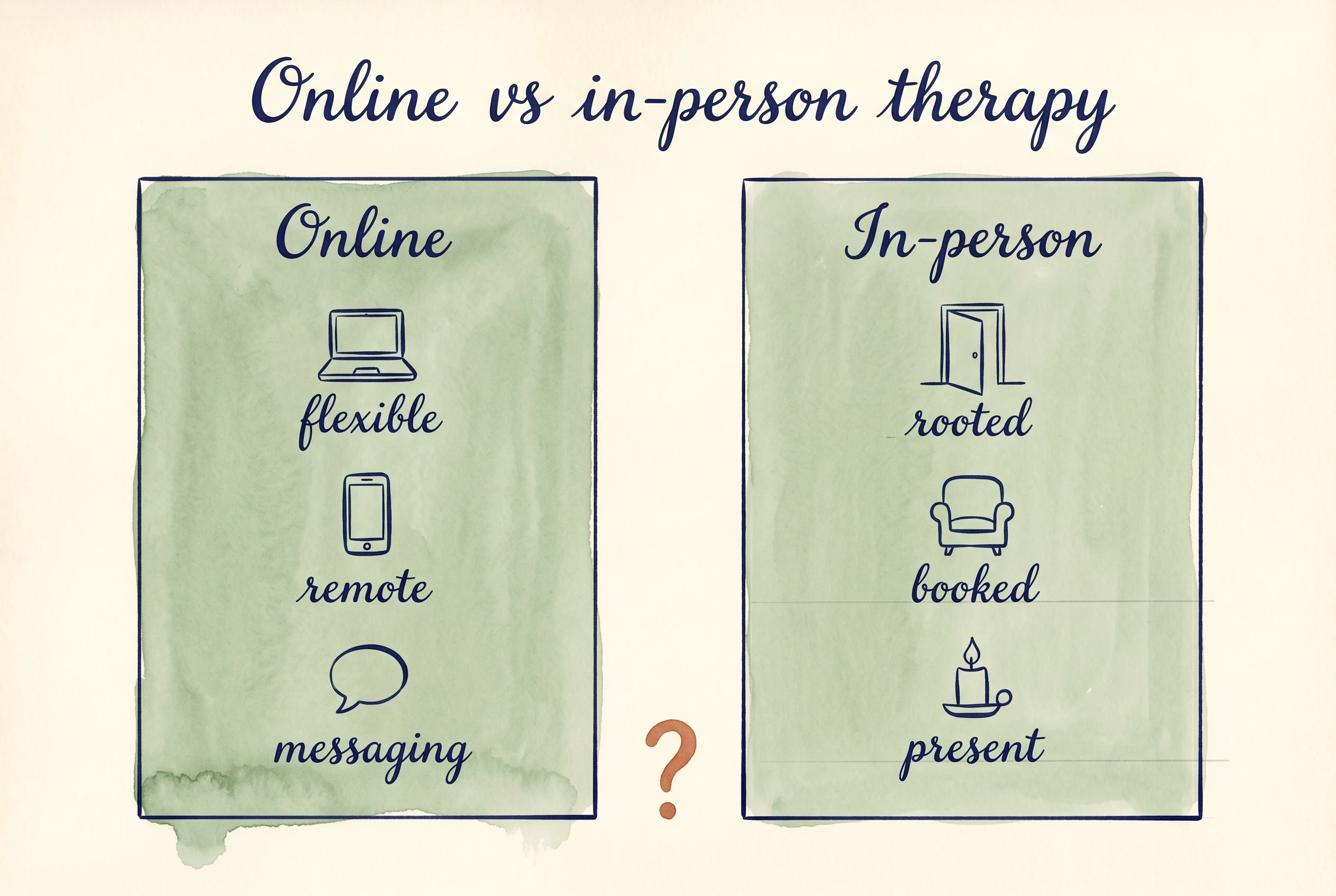
Here's what each tool is best for
One line per tool. Open the full review when something looks like yours.
Online therapy platforms
Online therapy platforms
Licensed-clinician platforms that combine live sessions, messaging, and (for some) insurance routing or medication. Best for moderate-to-meaningful symptoms or for paid weekly support.
Online therapy
BetterHelp

Largest network, fastest match
Subscription therapy with weekly live sessions plus messaging on a single plan. Useful when you want to start fast and have flexibility on day and channel.
- Public price signal
- $65–$100/week, billed in four-week cycles (one bill = four weekly sessions). Exact price depends on location, therapist preferences, and any current discount.
- Format
- Live video, phone, or chat — one weekly session plus messaging between sessions on the same plan.
- Who should skip
- You need direct insurance billing, medication management on the same plan, or want to pick a specific local therapist before paying.
- Evidence note
- Public pricing page checked May 7, 2026. In-account quote and typical matching speed still pending for the full review.
Online therapy
Talkspace

Best insurance route, psychiatry add-on
Telehealth platform with insurance partnerships, separate psychiatry plans, and tiered messaging-or-video options. Useful when you'd rather route through a benefit than self-pay.
- Public price signal
- Self-pay from $69/week (messaging), $99/week (video + messaging), $109/week (video + messaging + workshops). Insurance cost varies by plan.
- Format
- Messaging, live video, audio. Up to four 30-minute video sessions per month on video plans.
- Who should skip
- You want the cheapest self-pay plan with weekly live therapy included by default — Talkspace's video tier is pricier than peers.
- Evidence note
- Help Center pricing checked May 7, 2026. Insurance eligibility check still needed.
Online therapy
Brightside Health

Therapy with medication management
Combines therapy with psychiatric medication review on the same platform — relevant when treatment may include both. Plans separate therapy, psychiatry, and combined.
- Public price signal
- Therapy from $299/month; psychiatry from $95/month after first visit; combined plans available. Insurance coverage in many U.S. states.
- Format
- Live video sessions plus messaging; psychiatry includes prescription management.
- Who should skip
- You only want talk therapy ($299/mo is overpriced for that alone), need controlled-substance prescribing, or are outside the U.S.
- Evidence note
- Public plan pages checked May 7, 2026. Coverage and prescriber availability vary by state.
Online therapy
Online-Therapy.com

Structured CBT program with worksheets
Built around an 8-section CBT program: live sessions plus worksheets, journaling, yoga and meditation tracks, and therapist feedback between sessions. Useful when you want a curriculum, not just chats.
- Public price signal
- From $48/week (first month with public 20% discount). Standard tiers: $60/$90/$120 per week depending on live-session count.
- Format
- Worksheets, journaling, live video sessions (Standard: 1/week, Premium: 2/week), unlimited messaging.
- Who should skip
- You only want session-based therapy without homework, prefer a polished mobile app, or want direct insurance billing.
- Evidence note
- Official FAQ and plan pages checked May 7, 2026. No direct insurance billing in the public FAQ; itemized receipts mentioned.
Mental health apps
Mental health apps
Daily tools — meditation, sleep, CBT-style prompts, or AI chat — at a small monthly cost or free. Best as a supplement, not a replacement for therapy.
App
Headspace

Guided meditation courses
Structured courses for stress, focus, sleep, and anxiety, with named teachers and a clear learning arc. The 'Basics' onboarding pack is one of the best entry points to meditation in any app.
- Public price signal
- From $69.99/year or $12.99/month. Free trial; student and family pricing available.
- Format
- Guided audio, sleepcasts, short focus sessions, courses with progress tracking. iOS, Android, web.
- Who should skip
- You want unguided silent meditation, dislike subscription pricing, or already have a sleep-stories habit on Calm.
- Evidence note
- Pricing page checked May 7, 2026. Headspace cites peer-reviewed studies on its app on its science page; results vary by use.
App
Calm
Sleep stories and bedtime audio
Famous for its narrated sleep stories, soundscapes, and slow-paced bedtime content. Useful when your specific problem is falling or staying asleep.
- Public price signal
- From $69.99/year (Calm Premium). 7-day free trial; lifetime option available at higher one-time price.
- Format
- Audio sleep stories, meditations, music, masterclasses. iOS, Android, web.
- Who should skip
- You want a structured meditation curriculum (Headspace fits better) or you need behavioral therapy for chronic insomnia (consider CBT-I).
- Evidence note
- Public pricing page checked May 7, 2026. Calm publishes a research summary; outcomes are not guaranteed.
App
Woebot

Free CBT-style chatbot
Conversational CBT and behavioral-activation prompts in chat form, designed with clinical input. Free at the time of writing — one of the strongest no-cost options for daily reflection.
- Public price signal
- Free for general users (consumer app). Some employer/health-plan integrations exist.
- Format
- Text chat with a CBT-style bot, mood check-ins, brief skill exercises. iOS, Android.
- Who should skip
- You're in crisis, working through trauma, or want human therapist contact. Chatbots are practice prompts, not clinical care.
- Evidence note
- Public site and app store pages checked May 7, 2026. Woebot has been studied in peer-reviewed trials; it is not a substitute for therapy and explicitly says so.
App
Wysa

AI mental health coach with optional human therapist
AI chatbot for stress, sleep, and low mood, with the option to add a human coach on a paid tier. Useful when you want more depth than a meditation app but less commitment than therapy.
- Public price signal
- Free core app. Wysa Premium and Coach plans add features and human support; check current pricing in-app.
- Format
- AI chat plus exercises (CBT, dialectical, mindfulness). Optional human-coach tier. iOS, Android.
- Who should skip
- You want a meditation-first experience, need licensed therapy, or are uncomfortable with AI handling reflection prompts.
- Evidence note
- Public site checked May 7, 2026. Wysa references multiple research collaborations; outcomes vary and the app is not therapy.
Workbooks
Workbooks
Structured self-help books with reading and worksheets, at one-time book pricing. I've compared five CBT and five DBT workbooks below — what each is best for, where each falls short, and which one I'd reach for first. ACT and trauma-focused comparisons coming separately.
Workbook
CBT workbooks
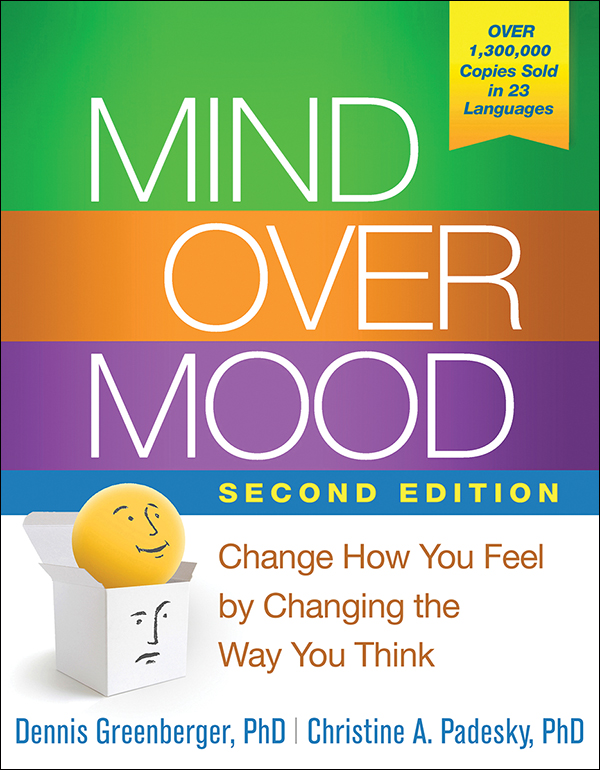
5 compared. My pick: Mind Over Mood
The most-studied workbook category for anxiety and depression. I compared five — Mind Over Mood, Retrain Your Brain, The Anxiety and Phobia Workbook, The Feeling Good Handbook, and The CBT Workbook for Mental Health — with what each is actually best for and where each falls short.
- Public price signal
- Roughly $12–$30 per book. Used copies under $15 are common across all five.
- Format
- Print or e-book. Self-paced chapters with worksheets, thought records, and behavioral experiments.
- Who should skip
- You won't engage with worksheets, you want short daily prompts (a journal fits better), or you need active treatment for severe symptoms.
- Evidence note
- Comparison checked May 7, 2026. Bibliotherapy research suggests guided self-help (workbook + check-ins with a clinician) outperforms unguided use.
Workbook
DBT workbooks
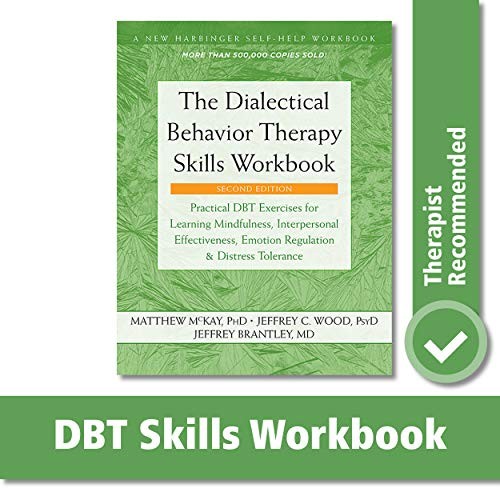
5 compared. My pick: The DBT Skills Workbook
DBT workbooks for emotional regulation, distress tolerance, and mindfulness practice. I compared five — The DBT Skills Workbook (McKay/Wood/Brantley), Linehan's Skills Training Handouts, the DBT Skills Workbook for Anxiety, Don't Let Your Emotions Run Your Life, and the DBT Skills Workbook for PTSD.
- Public price signal
- Roughly $15–$30 per book. Used copies under $15 are common.
- Format
- Print or e-book. Exercises organised around the four DBT modules: mindfulness, distress tolerance, emotion regulation, interpersonal effectiveness.
- Who should skip
- You're in active crisis or have BPD-pattern symptoms — full DBT (clinician + skills group) has the evidence; a workbook alone does not. You want CBT-style thought records (start with the CBT workbook comparison instead).
- Evidence note
- Comparison checked May 7, 2026. Full DBT (clinician + skills group) is the evidence-supported model; standalone workbook use is skills practice, not full DBT.
Therapy journals
Therapy journals
Guided journals for daily reflection — CBT thought records, gratitude prompts, or hybrid formats. Best as a noticing practice, not as treatment.
Journal
The Anti-Anxiety Notebook
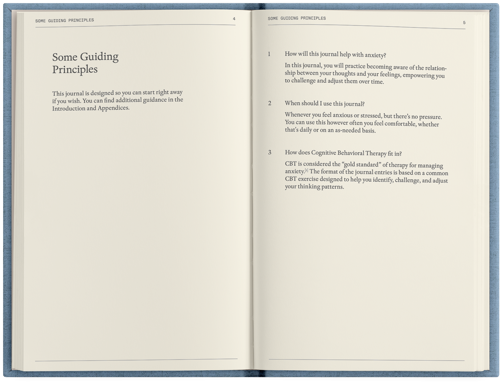
Therapist-designed CBT journal
A guided journal built around the CBT thought record, made by Therapy Notebooks. Each entry walks through situation, feeling, thought, and reframe. Useful when you want the structure of CBT without the workbook commitment.
- Public price signal
- Around $40 USD for the original notebook. Refills and other titles also available.
- Format
- Hardcover guided journal. Roughly 6 months of daily prompts depending on use.
- Who should skip
- You want a quick three-line gratitude page (a Five Minute Journal fits better), or you need active treatment.
- Evidence note
- Designed with input from therapists; structure is recognizable from CBT thought-record protocols. Outcomes are personal, not clinical.
Journal
The Five Minute Journal

Short daily reflection habit
Two short prompts in the morning, two at night. Designed for consistency rather than depth. Useful when a longer journal practice keeps failing.
- Public price signal
- Around $30 USD for the print edition. App version separately priced.
- Format
- Print journal (undated, ~6 months) or app. ~5 minutes per use by design.
- Who should skip
- You want CBT-style cognitive work (an Anti-Anxiety Notebook fits better), or you find gratitude prompts unhelpful when low mood is severe.
- Evidence note
- Built on positive-psychology prompt patterns (gratitude, intention setting). Not a clinical intervention.
Deep-dive reviews
Want the longer take on one of these?
For the tools I've covered in their own full review, here are the individual pages — pricing in detail, where each one falls short, and the situations I'd point a reader at it for.
- BetterHelp review Online therapy — when I'd actually recommend it, and when I wouldn't (including the 2023 FTC settlement).
- Talkspace review The platform that wins on insurance and psychiatry — with the 2024 TikTok data lawsuit and matching caveats worth knowing before signing up.
- Best CBT workbooks Five workbooks compared, picked by situation. Plus three free public-health PDFs and a "when a workbook isn't enough" note.
- Best DBT workbooks Five DBT workbooks with the full-DBT-vs-skills-practice distinction made plainly, plus free public-domain resources.
- Best therapy apps Five mental-health apps (Headspace, Calm, Woebot, Wysa, Insight Timer) compared for what each one is actually good at.
- Therapy journal prompts Forty-something prompts grouped by what's going on — daily check-ins, the inner critic, stuck decisions, anxious loops, aftercare.
Decision criteria
Six checks before you commit
A polished signup flow can make any tool feel simpler than it is. These are the practical checks that decide whether you'll actually use it three months in.
- fit for the reader's situation
- price and billing rhythm
- format and access
- evidence base and source
- limits and who should skip
- crisis and safety boundary
If help can't wait
Self-help and apps aren't emergency services.
If you or someone close may be in immediate danger, call local emergency services. In the U.S., call or text 988 or visit 988lifeline.org . In the U.K., call Samaritans on 116 123. In Germany, call Telefonseelsorge on 0800 111 0 111 or 0800 111 0 222.
How we reviewed
What's verified, and what's still pre-purchase research
Verified now
- Official pricing and plan pages, checked May 7, 2026.
- Format, channel, and live-session details from official sources.
- Insurance, reimbursement, and financial-aid signals.
- Crisis and safety boundary language on each tool's site.
- Categorical fit against clinical practice patterns.
Still pre-purchase research
- Hands-on signup, matching, and cancellation flows.
- Real quotes by U.S. state and country.
- Therapist availability and average waiting time.
- Privacy dashboard and data-export options.
- Long-term renewal behavior and pricing changes.

Reviewed by
Antonia Moosmann, M.Sc. Clinical Psychology
Antonia is a psychologist in Germany with more than four years of clinical and counseling experience. She writes the psychology- and therapy-adjacent pages on this site, and checks them for fit, limits, sourcing, and safety. Nothing here is therapy, diagnosis, or medical advice.
Read Antonia's profileFAQ
Cross-category questions
Should I start with therapy, an app, a workbook, or a journal?
Start by naming the situation. Moderate-to-meaningful symptoms or a clear diagnosis usually call for a licensed clinician — online therapy if access is the issue. For mild stress, sleep, or a habit you want to build, an app is often enough. For structured cognitive work at low cost, a CBT workbook is hard to beat. For a daily noticing practice, a guided journal does the job. Many people use two: therapy plus a journal, or a workbook plus a meditation app.
Do mental health apps actually work?
Some have been tested in research; many have not. Apps with named clinical teams and published trials (Woebot, Wysa, Headspace) carry more evidence than apps that are mainly content libraries. Even tested apps are usually adjuncts, not substitutes for therapy. Treat any app as a supplement, and watch for outcome promises in the marketing.
Is a workbook a substitute for therapy?
Often no. Bibliotherapy research suggests guided self-help (workbook plus check-ins with a clinician) outperforms unguided self-help. Workbooks are excellent practice tools and can carry a lot of weight in mild-to-moderate situations, but trauma, severe depression, suicidal thoughts, or complex symptoms call for professional support.
When should I move from self-help to a clinician?
When self-help hasn't produced change after a fair attempt, when symptoms get worse, when daily functioning slips, when you have thoughts of harming yourself, or when the situation involves trauma, abuse, or addiction. Apps and workbooks are designed to support people under strain — including those waiting for a therapy spot or working between sessions — but they're not built to handle crisis. Therapy is designed to step in where self-help can't reach.
Why no rating stars?
Stars look authoritative, but they hide more than they show. Until each tool has been tested end-to-end — signup, match, cancel, and follow-through — we'd rather show evidence than a number. Where we cite research or public pricing, we link to the source.
How current is this guide?
Source pages were checked on May 7, 2026. Pricing and plans change frequently. Verify the current price, plan, and cancellation terms on each official site before paying.
Sources
Source notes
Source pages were checked on May 7, 2026. Pricing, plans, and availability change frequently — confirm the current details on each official site before paying or committing.
- BetterHelp pricing page
- Talkspace Services + Out-of-Pocket Pricing
- Brightside Health pricing
- Online-Therapy.com FAQ and plans
- Headspace subscriptions page
- Calm subscribe page
- Woebot Health
- Wysa
- Mind Over Mood (Greenberger & Padesky)
- Feeling Good (David D. Burns)
- The Anti-Anxiety Notebook (Therapy Notebooks)
- The Five Minute Journal (Intelligent Change)
- SAMHSA crisis guidance
- MindfulPick review methodology