CBT
CBT workbooks
Most-studied method
Five real CBT workbooks compared on fit, structure, and evidence — plus three free public-health PDFs for readers who'd rather start at $0.
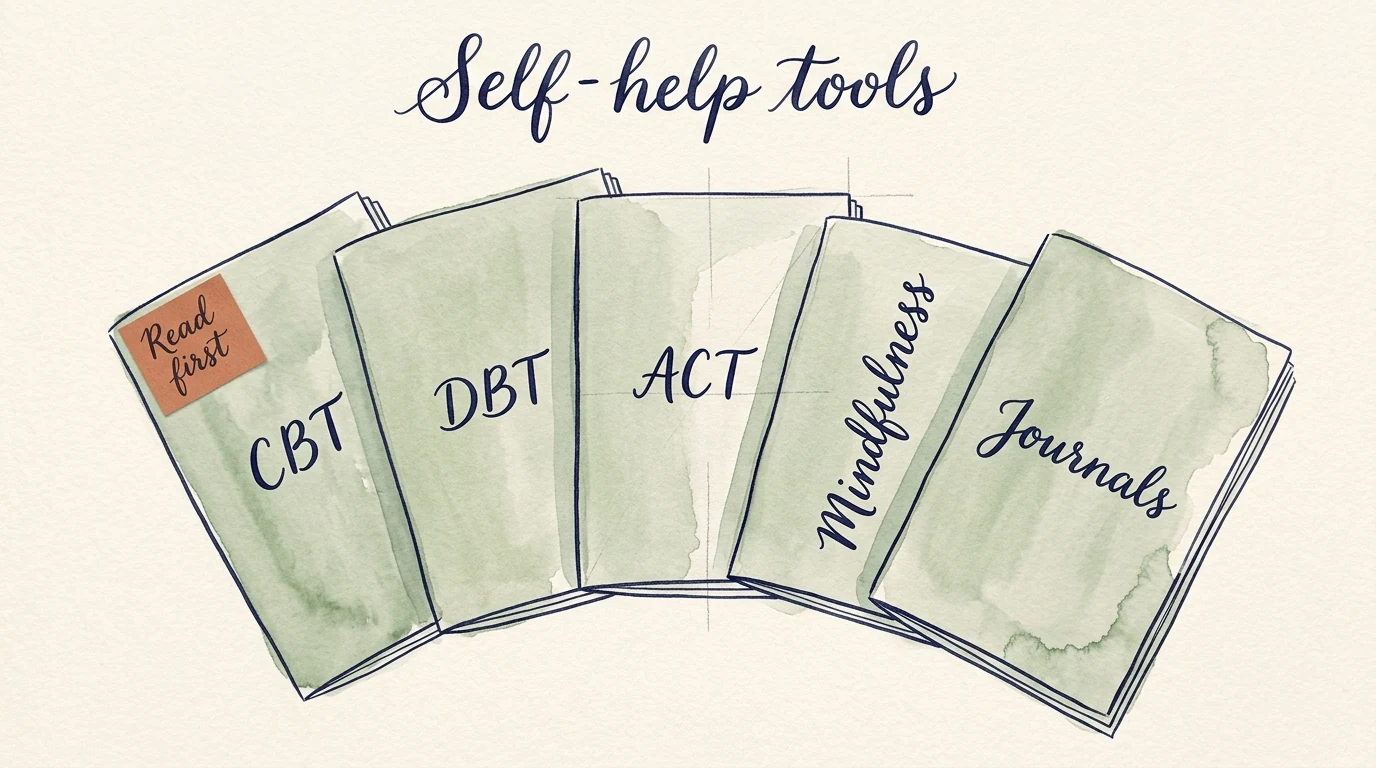
Self-help tools
Self-help tools work when you actually use them. I review the structure, the evidence behind the method, and the situations they're not built for — so you can pick something you'll finish, not just buy.
Where this fits
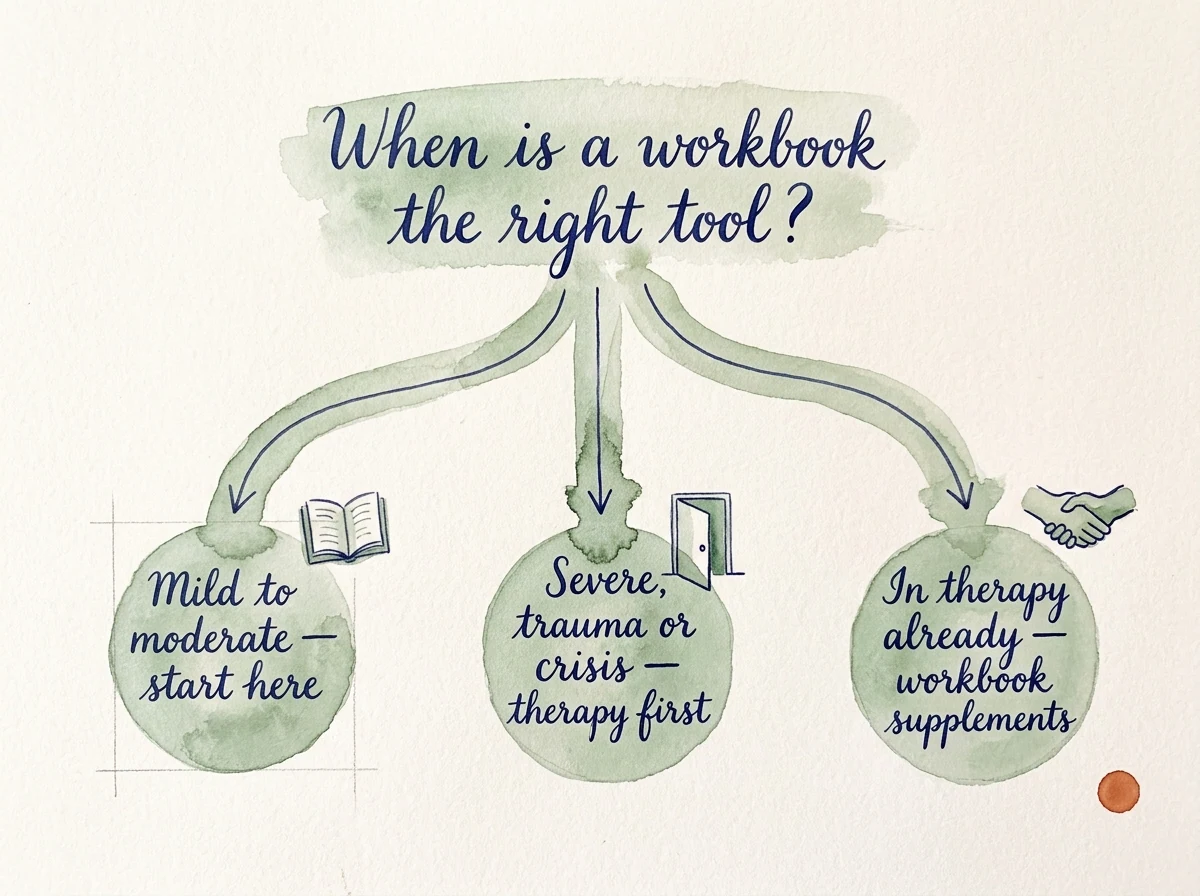
Self-help tools are a good match for mild-to-moderate situations when you have time to work through chapters or daily prompts. They're not a substitute for therapy, diagnosis, or crisis support. If you're not sure where to start, the comparison of therapy and tools lays out the tradeoffs side by side.
Two category reviews are live. ACT, mindfulness, and journal prompts are next. Each review includes free options before paid picks.
CBT
Most-studied method
Five real CBT workbooks compared on fit, structure, and evidence — plus three free public-health PDFs for readers who'd rather start at $0.
DBT
Emotional regulation
Five DBT workbooks for emotional regulation, distress tolerance, and intense emotions — with free resources from the people who developed DBT.
I'm Antonia Moosmann, a psychologist. Each workbook is read cover-to-cover before it's compared, with notes on who it actually fits and the situations it's not built for. The full method is in the review methodology; the way these reviews are edited is in the editorial policy.